

The big picture reveals a troubling paradox: while Brent crude rose about 44% since early February, diesel prices in Vietnam surged 132%. This 3× gap didn't originate from international markets — it exposed the limits of the entire domestic fuel price management system as the stabilization fund ran dry, taxes were already slashed to zero, and the National Assembly had to convene emergency tax exemptions.
Strait of Hormuz: The Supply Shock That Pushed Brent Past $100
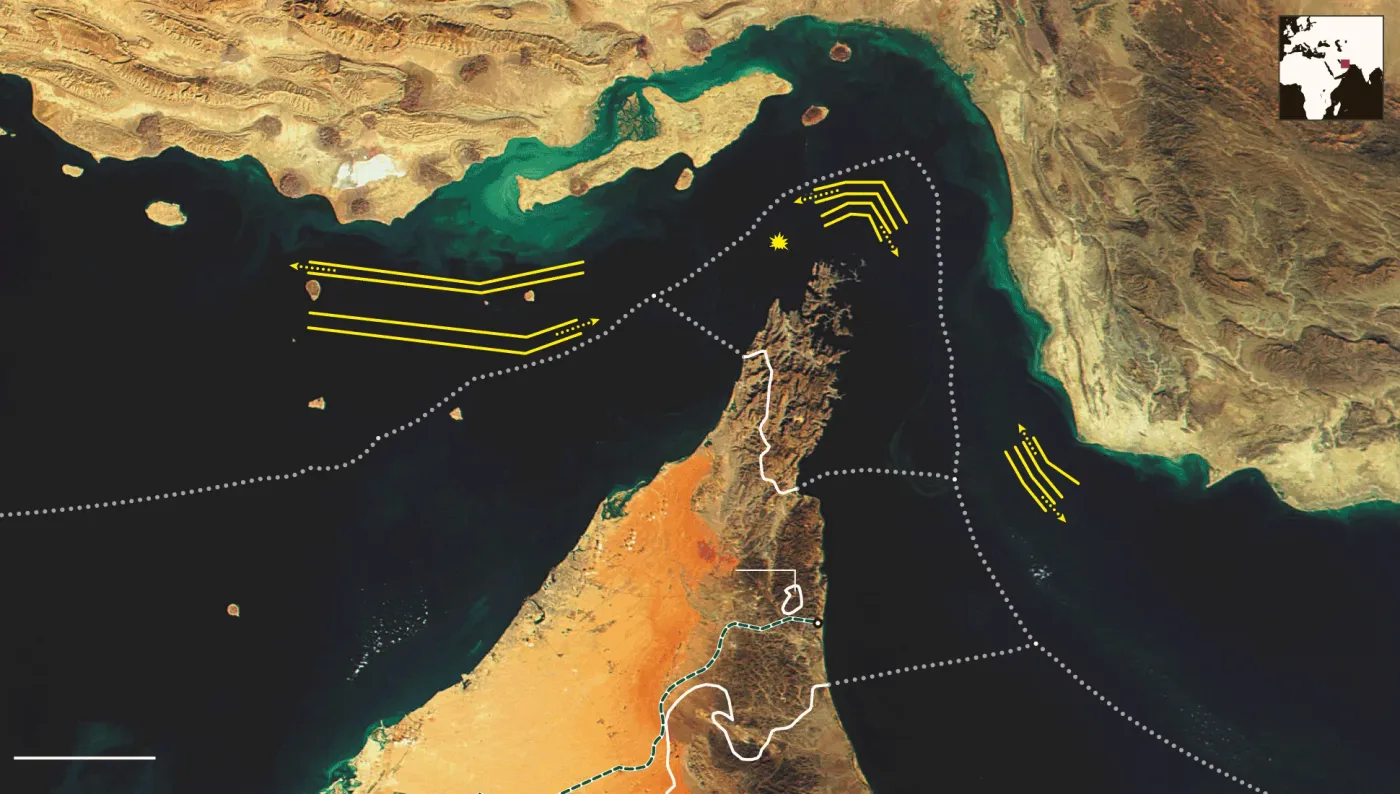
The surface cause of the global oil price surge was the escalating military conflict between the US, Israel, and Iran, particularly after Iran blockaded the Strait of Hormuz — a shipping lane carrying roughly 10-13 million barrels per day, accounting for nearly 20% of global oil supply.VnExpress
Brent crude climbed steadily from the $67-68 range in late January past $100 in early March, peaking at $112.57 on March 27. On April 7, President Trump announced a 2-week ceasefire with Iran, sending Brent plunging 13.3% on April 8 from $109.27 to $94.75.Công an Nhân dân However, prices quickly recovered to $97.20 on April 9, as Iran had not agreed to fully reopen the strait and planned to charge $1/barrel for ships passing through Hormuz.Tuổi TrẻDân Trí
But crude oil prices are just the starting point. Money flows through multiple filtering layers before reaching the gas pump, and these layers explain why domestic diesel surged 3× faster.
Vietnam's Fuel Pricing Mechanism: Multi-Layered Taxes That Amplify When Depleted
Retail fuel prices in Vietnam don't simply mirror global prices. From the CIF import price to the retail pump price, each liter of fuel carries multiple cost layers: import tax, special consumption tax, environmental protection tax, VAT, operating costs, regulated profit margin, and the price stabilization fund.
Under normal conditions, taxes account for roughly 35-40% of the retail price, creating a "buffer" that prevents domestic prices from rising at the same pace as global markets. But when global prices surge too fast, this buffer gets "squeezed dry": import tax was already cut to 0% under Decree 72/2026, environmental protection tax was already at 0 VND/liter, and the stabilization fund was disbursed at maximum capacity.Government Portal
When there's no room left for tax cuts, every dong increase in global prices transmits directly to retail prices — even amplified, because shipping premiums and insurance also rise with geopolitical risk.
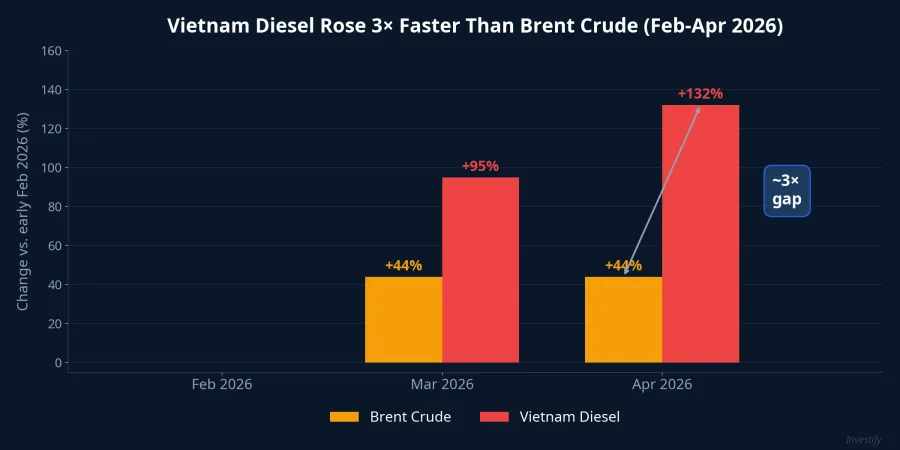
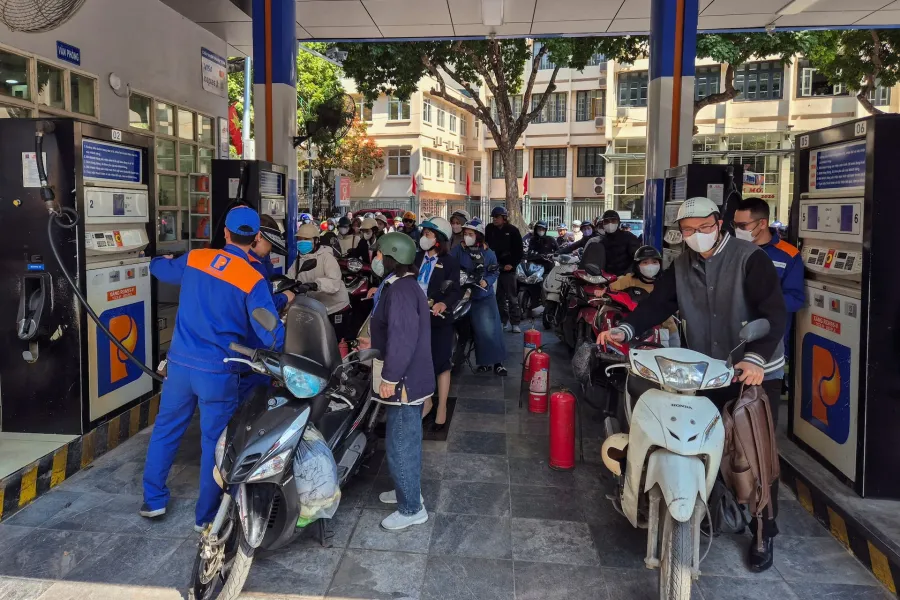
In early February 2026, a liter of 0.05S diesel cost 18,450 VND. By April 3, it had jumped to 44,780 VND/liter — a 142.6% increase.Thanh Niên After a downward adjustment on April 8, diesel currently sits at 42,840 VND/liter, still 132% higher than two months ago.
The Stabilization Fund: The "Last Shield" Nearing Depletion
The Petroleum Price Stabilization Fund (BOG) is a uniquely Vietnamese tool that allows the Ministry of Industry and Trade and Ministry of Finance to accumulate or disburse funds to "smooth out" price volatility. During the recent period, the fund was activated at unprecedented intensity.
For diesel alone, the fund disbursed up to 5,000 VND/liter during the April 3 adjustment cycle.Thanh Niên Facing depletion, the Government had to advance 8,000 billion VND from the central budget (Decision 483, March 27, 2026) to replenish the fund.VietnamNet Without the stabilization fund, base fuel prices would be approximately 3,000 VND/liter higher than current retail prices.VietnamNet
At the April 8 adjustment, the ministries neither accumulated nor disbursed the stabilization fund — signaling that remaining capacity is extremely limited. In other words, the BOG fund absorbed a large share of price pressure throughout March, but its capacity to continue doing so is rapidly diminishing.
National Assembly Moves on Emergency Tax Exemptions: Budget Loses 7,200 Billion VND/Month
Recognizing that existing tools had nearly reached their limits, on April 9, 2026, the Standing Committee of the National Assembly agreed to submit a tax exemption proposal for fuel to the full National Assembly.Người Lao Động Specifically: environmental protection tax proposed at 0 VND/liter for all fuels; special consumption tax proposed at 0% for all gasoline types; VAT to be reduced per Government proposal. The period would run from April 16, 2026 through June 30, 2026, with the Prime Minister authorized to adjust based on market conditions.Dân Trí

Each month of tax exemption costs the state budget approximately 7,200 billion VND.Người Lao Động Over the 2.5-month application period, total budget cost reaches roughly 18,000 billion VND, not counting the 8,000 billion already advanced for the stabilization fund. The big picture shows the Government accepting budget "bleeding" to maintain social stability, but fiscal headroom is not unlimited.
March CPI Hits 4.65%: Fuel-Driven Inflation Pressure
The diesel price surge triggered a chain reaction of inflation, as diesel is the primary fuel for freight transport, logistics, and industrial production. March 2026 CPI rose 4.65% year-on-year — the highest in 5 years.VnEconomy
The transport category surged 12.85%, contributing 1.28 percentage points to CPI — the largest single contributor. Airfares jumped 23.19%, train tickets rose 13.92%.CafeF Q1/2026 CPI increased 3.51% year-on-year, with core inflation at 3.63%.Thị trường Tài chính Tiền tệ
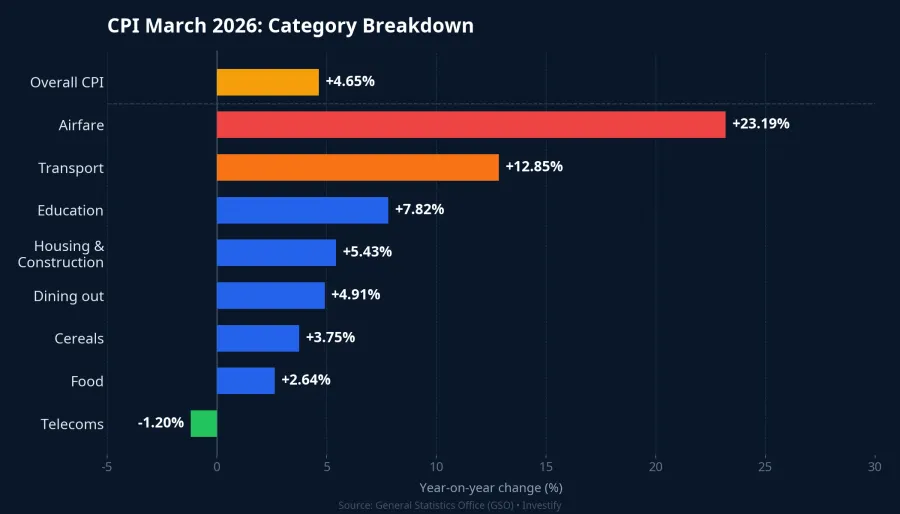
The ripple effect through supply chains is clear: rising transport costs drive up food prices, construction materials, and pressure across the entire economy. The National Assembly's 2026 inflation target of below 4.5% is now under serious threat.
Notably, as the new SBV Governor just held an emergency meeting with 46 banks on April 9 about lowering lending rates, inflation pressure from fuel creates a dilemma: cutting rates to support businesses risks pushing inflation higher.
Oil & Gas Stocks: Crude Surges, Shares Plunge
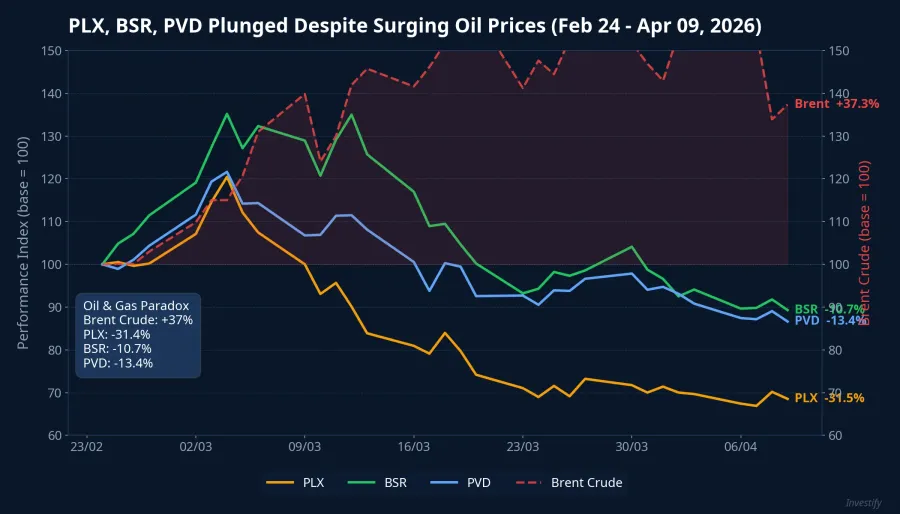
Capital is flowing away from oil and gas stocks despite crude hitting multi-year highs. Most listed oil and gas shares fell sharply during this period, reflecting complex divergences within the sector.
PLX (Petrolimex) dropped from 57,800 VND (Feb 27) to 39,550 VND (Apr 9), losing 31.6%. While low-cost inventory generates profit when retail prices rise, the price management mechanism and stabilization fund squeeze margins. As the largest fuel distributor, PLX bears the heaviest stabilization fund burden.
BSR (Binh Son Refining) fell from 31,200 VND to 25,000 VND, losing 19.9%. When crude rises too fast, input costs increase before regulated output prices can adjust, compressing margins. BSR depends on imported crude for 30-35% of inputs.
PVD (PV Drilling) declined from 38,600 VND to 32,050 VND, losing 17.0%. High oil prices boost drilling demand but PVD VI rig maintenance impacts near-term results.
The relative beneficiaries are oil and gas shipping companies (PVT, PVP, GSP), benefiting from surging freight rates as the Hormuz shipping lane faces disruption. Meanwhile, airlines (HVN, VJC) and road freight operators suffer most with fuel costs comprising 30-40% of operating expenses.
US-Iran Ceasefire: Only Temporary Relief
The 2-week ceasefire on April 7 delivered immediate impact: Brent fell 13.3% on April 8, domestic diesel dropped 1,940 VND/liter.Người Lao Động But the ceasefire is only temporary: Iran hasn't committed to fully reopening the strait, and Israel's continued attacks on Lebanon create escalation risk at any moment. Brent's recovery to $97.20 on April 9 shows the market still prices in high supply disruption risk.
Implications for Investors
The big picture reveals that the 132% diesel surge isn't just about global oil prices — it's a stress test for Vietnam's entire fuel price management system. Key factors to monitor include: progress of US-Iran negotiations after the 2-week ceasefire (expected around April 21); the pace of stabilization fund spending and the ability to replenish from the budget; April CPI trends (breaching 5% would create major monetary policy pressure); and the National Assembly's final decision on tax exemptions.
For investors, this period demands caution with oil and gas stocks: high crude prices don't automatically mean oil stocks will rise, when regulatory mechanisms and geopolitical risks create significant divergence. Inflation pressure from fuel prices is a macro risk worth considering when allocating portfolios, especially as fixed-income investments become more attractive in a rising inflation environment.