
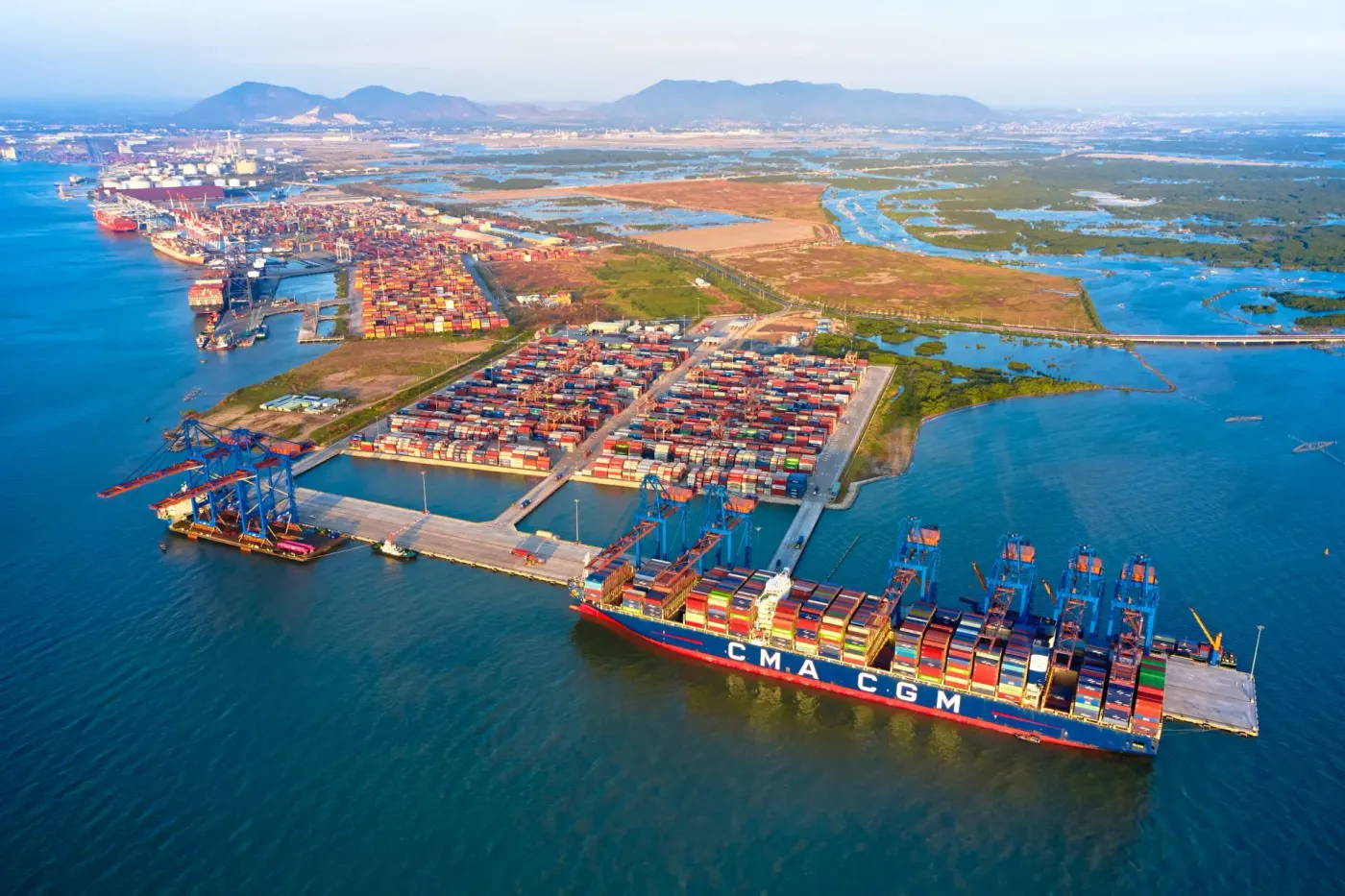

Here is what the reports are not spelling out: while analysts debate P/E ratios and revenue growth, a ticking time bomb sits right under the cost-of-goods-sold line for dozens of Vietnamese export companies. Logistics costs have surged 30-60% in just four weeks, and the market appears blind to it.
The Hormuz Strait — a chokepoint triggering chain reactions
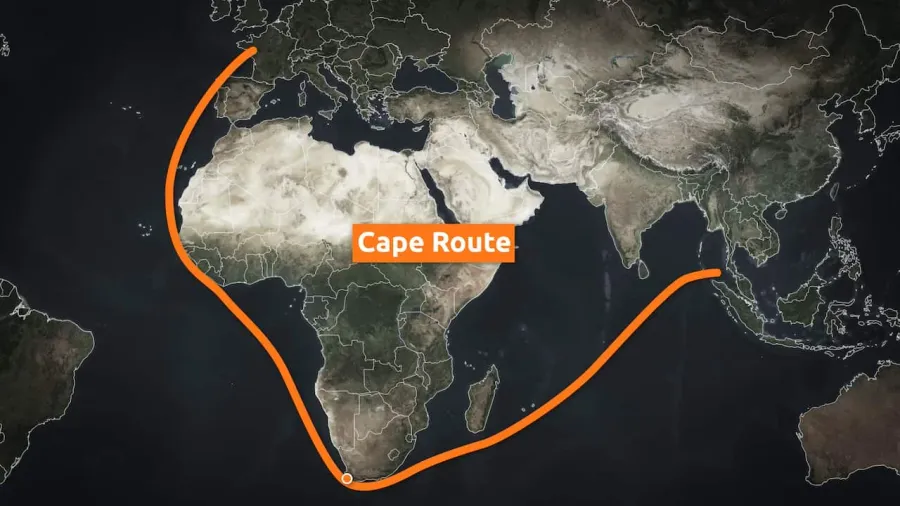
Since the commercial blockade of the Strait of Hormuz in early March 2026, global supply chains have plunged into the worst disruption since COVID-19. Commercial vessel traffic through the strait dropped by 90% after major P&I insurers cancelled coverage for ships transiting the conflict zone from March 5.Wikipedia Maersk, CMA CGM, and Hapag-Lloyd simultaneously suspended routes through the Red Sea and Hormuz, forcing vessels to reroute around the Cape of Good Hope — adding 10-14 days to transit times.
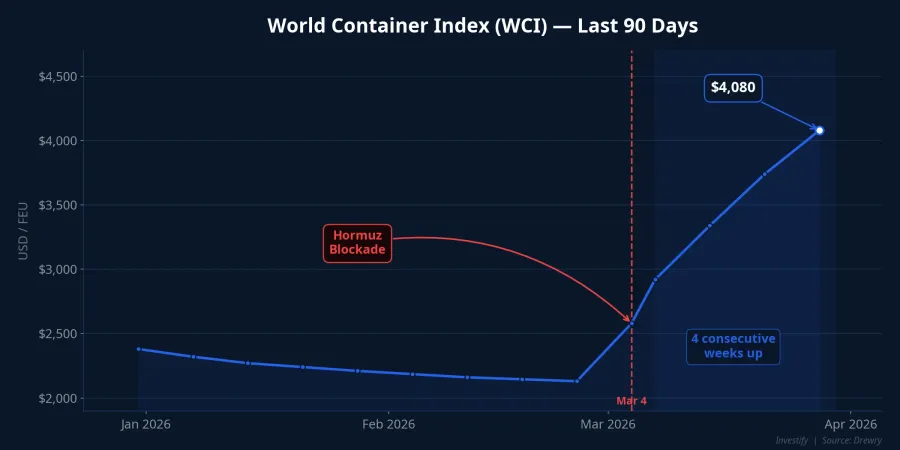
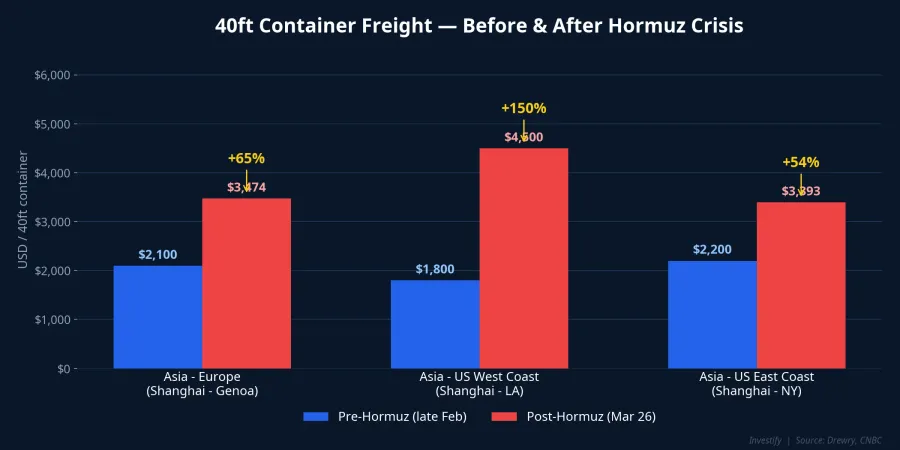
The direct consequence has been an explosion in freight costs. The Drewry World Container Index hit $2,279 per 40ft container in the week of March 26, marking four consecutive weeks of increases. Shanghai-Genoa rates climbed 12% to $3,474, while Asia-US West Coast rates surged past $4,500 — up roughly 150% since late February.CNBC
The real risk lies in profit margins
But who is actually bearing the cost? For Vietnamese exporters, this is a double blow: shipping rates and fuel prices are rising simultaneously. Brent crude has climbed to $114.69 per barrel (March 30 session), pushing marine fuel VLSFO prices from $521 to $822 per metric ton — a 58% increase. Overall shipping costs (domestic + ocean + container) for Vietnamese companies have risen 30-60%, according to industry reports.Vietstock
Rates for a 40ft container from Vietnam to Europe and the US have jumped from roughly $1,500 to $3,000-4,000. Some companies report export container volumes dropping over 50% year-on-year as orders are delayed or cancelled outright.
Textiles — the hardest hit sector
The textile and garment industry depends heavily on European and North American routes, where rates have increased the most. This is an existential challenge when the sector's gross profit margins typically sit at just 15-20% — meaning a mere 5-10% increase in logistics costs as a share of unit price can wipe out all profitability.VietnamPlus

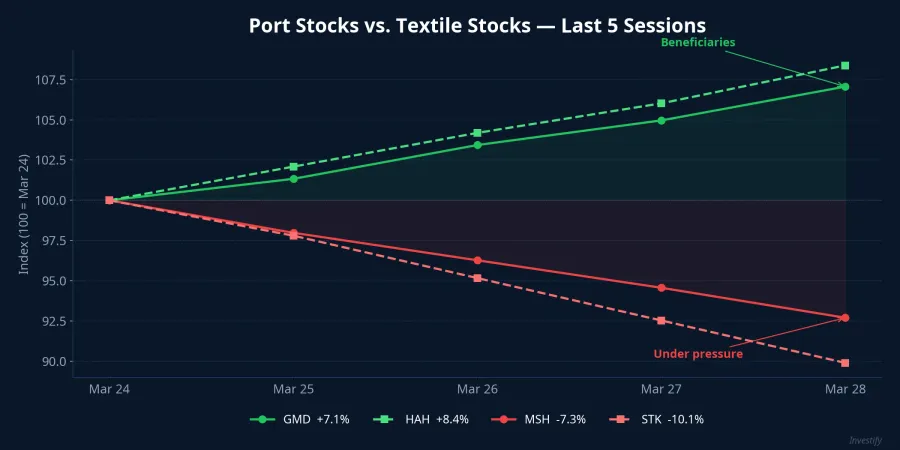
On the stock exchange, early warning signs are already appearing. May Song Hong (MSH) trades at VND 37,250, down 1.46% in its latest session. Soi The Ky (STK) fared worse — losing 4.48% in a single session to VND 13,850. The concerning part is that these declines may not yet reflect the full damage that will emerge in Q1 financial statements.
For the seafood sector, the issue goes beyond cost to time itself. Rerouting around the Cape of Good Hope adds 1-2 weeks to European transit times — potentially fatal for frozen goods with limited shelf life. Vinh Hoan (VHC) sits at VND 59,300 and Nam Viet (ANV) at VND 23,450 — neither clearly pricing in logistics risk yet, but Q1 earnings will be the real test.
Who benefits? Port operators and domestic logistics
While exporters absorb the pain, port operators and logistics companies are catching a tailwind. Gemadept (GMD) jumped 4.47% on March 25, holding firm at VND 78,500. Hai An Transport (HAH) rose impressively from VND 53,700 to VND 56,000 over five sessions, a gain of 4.3%. The logic is straightforward: when international routes are disrupted, demand for domestic transshipment rises, and GMD's deep-water Gemalink terminal at Cai Mep-Thi Vai holds a particular advantage as large vessels are forced to reroute.VnBusiness
However, investors should remain selective: DVP (Dinh Vu Port) declined 0.72% to VND 69,100, and VSC (Vietnam Container Shipping) lost 1.68% — demonstrating that not every port stock benefits equally. Picking the right names within the beneficiary group matters as much as identifying the trend itself.
The gap the market is ignoring
The most alarming aspect is that the market appears to have not fully priced logistics risk into export stocks. While oil prices rose 12% in just the week of March 25-30, textile and seafood stocks continue to trade near their previous ranges. When Q1/2026 financial statements are released in April, a contraction in gross margins could deliver a shock that triggers sharp price corrections.
CMA CGM has already announced new FAK rates of approximately $3,500/FEU effective April 1 — a signal that freight costs will continue escalating into Q2.Drewry
What investors should do right now
Ahead of Q1 earnings season, if you hold export stocks (textiles, seafood, electronics), three actions are urgent:
- Scrutinize gross profit margins — if a company cannot pass logistics costs through to its customers, profitability will erode significantly. Compare Q4/2025 gross margins against Q1/2026 estimates.
- Track the World Container Index weekly — this index serves as a thermometer measuring cost pressure for the following quarter. If the WCI continues climbing, Q2 will be even harder.
- Consider the beneficiary group — GMD and HAH deserve attention while freight rates remain elevated, but be selective since not every port stock benefits equally.
Logistics costs are a ticking time bomb that the market has yet to fully price in. The risk is not in what you see on today's stock board, but in the numbers that will appear in next month's financial statements. Those who see it early hold the advantage.