
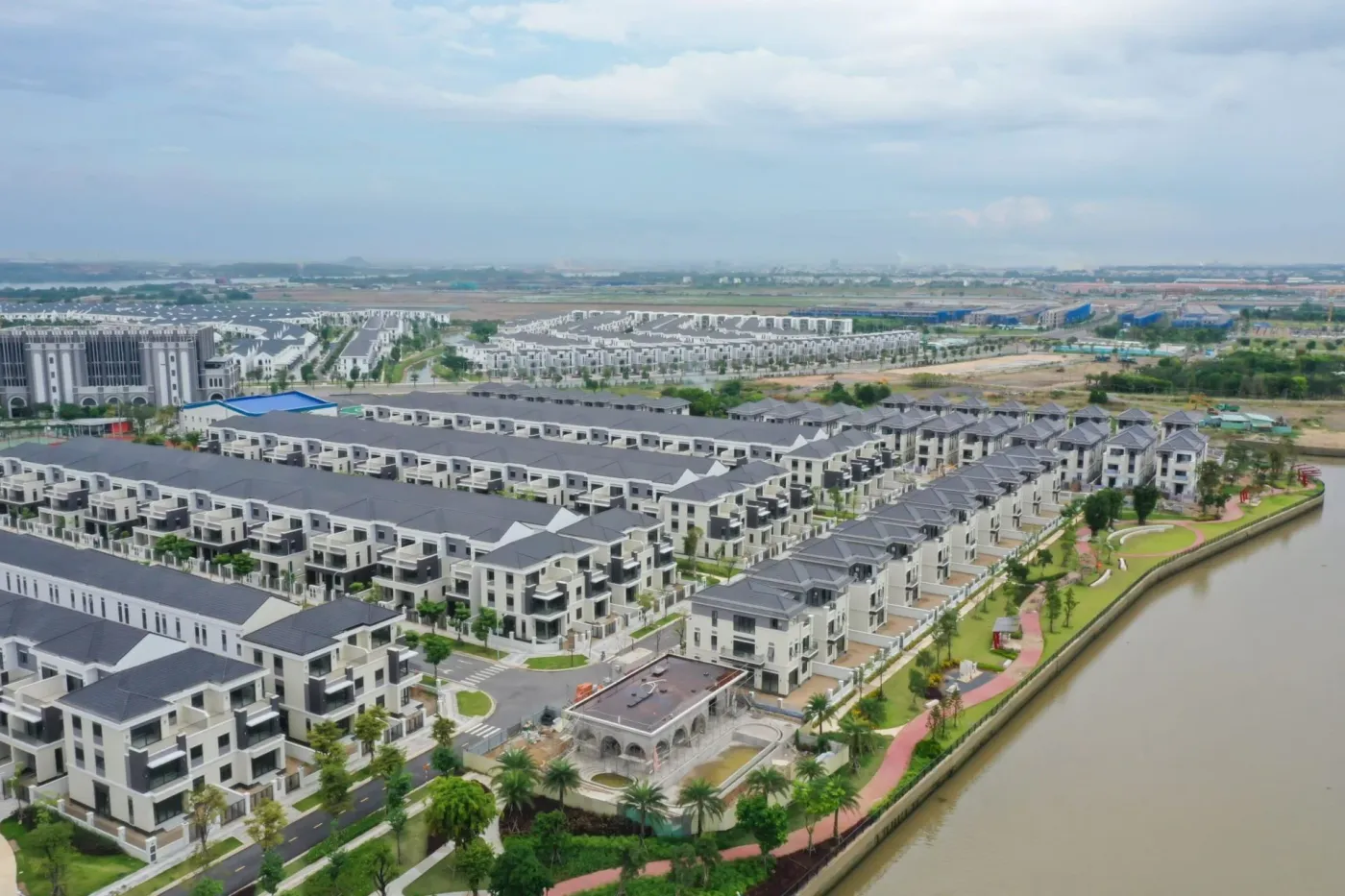

A company reports billion-dong profits yet auditors still doubt its ability to continue operating — it sounds paradoxical, but that is precisely what is happening with Novaland (NVL). What the headline does not reveal is that most of this profit did not come from selling homes or collecting cash, but from an accounting entry. Investors need to look beyond the top-line number to understand the real risks.
VND 1,819 Billion Profit — But Where Is the Cash?
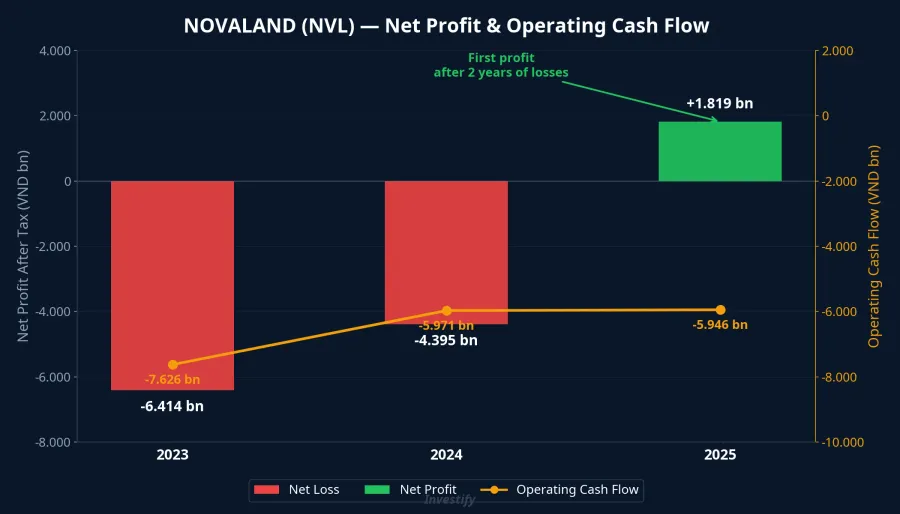
After two consecutive years of heavy losses, Novaland posted net profit of VND 1,819 billion for 2025, a dramatic reversal from the VND 4,395 billion loss in 2024. The NVL stock reacted immediately with four consecutive rising sessions in March 2026, including two limit-up days. Full-year revenue came in at roughly VND 6,965 billion, down 23% year-on-year — a detail easily overlooked when all eyes are on the profit figure.
However, a closer look reveals that most of the profit came from a VND 3,500 billion provision reversal related to the Lakeview City project.CafeF Specifically, Novaland reversed VND 2,197 billion in land-use fee obligations and VND 1,271 billion in late-payment penalties — reducing total provisions from VND 4,369 billion to just VND 1,014 billion. Put simply, this is not new cash flowing in but a write-back of previously booked expenses. Strip out this accounting adjustment, and core operations likely remained in the red.
More concerning, the Lakeview City reversal has not received official confirmation from tax authorities and could be adjusted upon further audit review.Nguoi Quan Sat The real risk: if the tax authority rejects the reversal, the entire VND 1,819 billion profit could evaporate.
Cash Flow Negative for 3 Consecutive Years — A Signal Too Loud to Ignore
While accounting profit turned positive, Novaland's operating cash flow remained deeply negative. In 2025, operating cash flow was negative by nearly VND 6,000 billion, marking the third straight year of heavy cash burn: -7,626 billion (2023), -5,971 billion (2024), and -5,946 billion (2025).Thuong Truong
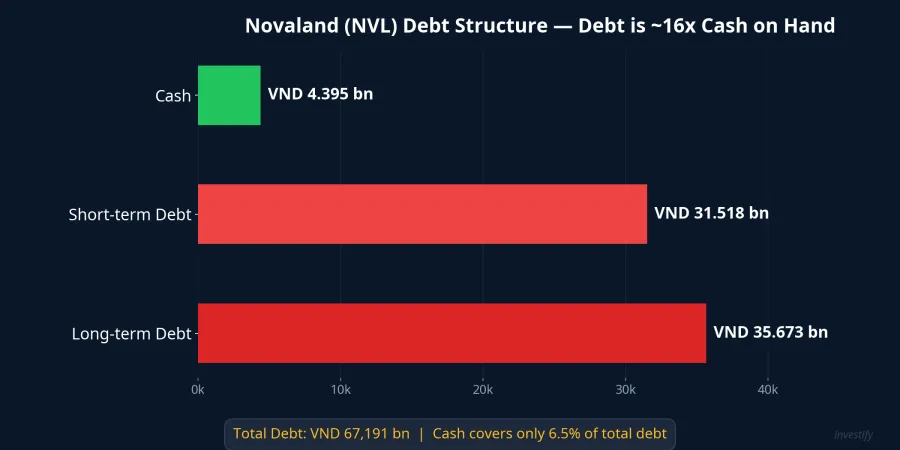
Cash on hand at year-end 2025 stood at just VND 4,395 billion — a dangerously thin buffer relative to tens of thousands of billions in debt obligations. The gap between "profit on paper" and "cash in the vault" is exactly what prompted auditors to speak up, and precisely what retail investors tend to overlook when reading headlines about billion-dong profits.
Auditors Question Going Concern Status
Despite reporting a profit, auditors issued an emphasis-of-matter paragraph regarding going concern. They pointed out that Novaland failed to meet certain short-term debt obligations related to loans, bonds, and other liabilities.Dan Tri Current liabilities exceeded current assets by VND 20,992 billion — an alarming liquidity indicator.
But who bears the cost? With a going concern warning from auditors, creditors will be reluctant to extend new financing, suppliers will tighten payment terms, and homebuyers will grow more anxious about delivery timelines. All of this creates a negative spiral that is difficult to escape.

The VND 67,000 Billion Debt Mountain — A Survival Challenge
Total outstanding debt at year-end 2025 reached VND 67,191 billion, up 9% from the prior year.VietTimes Short-term debt alone accounted for VND 31,518 billion — nearly half the total, creating enormous near-term maturity pressure.
Novaland itself has admitted it lacks sufficient financial resources to repay debts falling due through end-2026.VnExpress To address this, an extraordinary shareholder meeting in 2025 approved issuing over 320 million shares for debt-to-equity swaps, covering 13 bond codes with a total face value of approximately VND 6,074 billion.Vietstock Additionally, Novaland signed a comprehensive cooperation agreement with LPBank for financial restructuring. However, issuing shares to swap debt means diluting existing shareholders — current stockholders will be the first to bear the cost.
2026 Plan: 8x Profit Target — Ambition or Illusion?
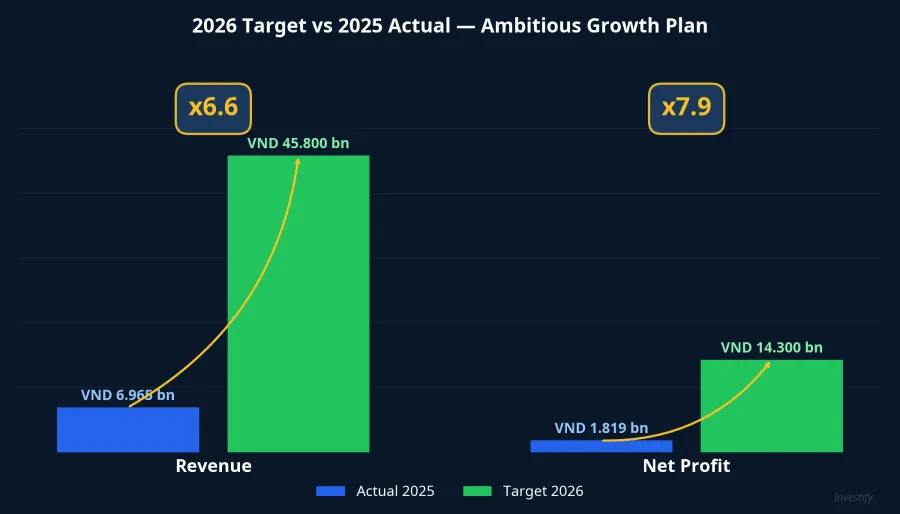
Novaland has set 2026 targets of VND 45,800 billion in revenue, over VND 14,300 billion in project profit, with plans to deliver more than 5,200 units and begin construction on 9,122 units.VietnamBiz This represents nearly 8x the 2025 profit and over 6x the revenue — numbers that look impressive on paper.
But this plan depends entirely on construction progress, resolving land-use legal issues, and delivering units on schedule. These happen to be Novaland's biggest weaknesses over the past two years. Deliveries are concentrated at Aqua City — a project already years behind schedule that has caused major frustration among buyers. Can a company severely short on cash actually accelerate construction to deliver over 5,200 units in a single year?
What Should Investors Watch For?
With the real estate sector "booming" — 13 stocks hit ceiling prices on March 27 — NVL trades around VND 14,800-15,150 per share, still a long way from its all-time high above VND 90,000. Hot money flowing into real estate may lift NVL in the short term, but the company's financial fundamentals do not change simply because the stock price rises.
The real risk is that retail investors equate "reporting a profit" with "healthy company." A business can book billions in profit on paper while still lacking cash to repay debts, still receiving auditor warnings, and still needing to dilute shares to survive. Before placing a buy order, ask yourself: are you buying based on a well-grounded recovery thesis, or are you simply following the crowd?