


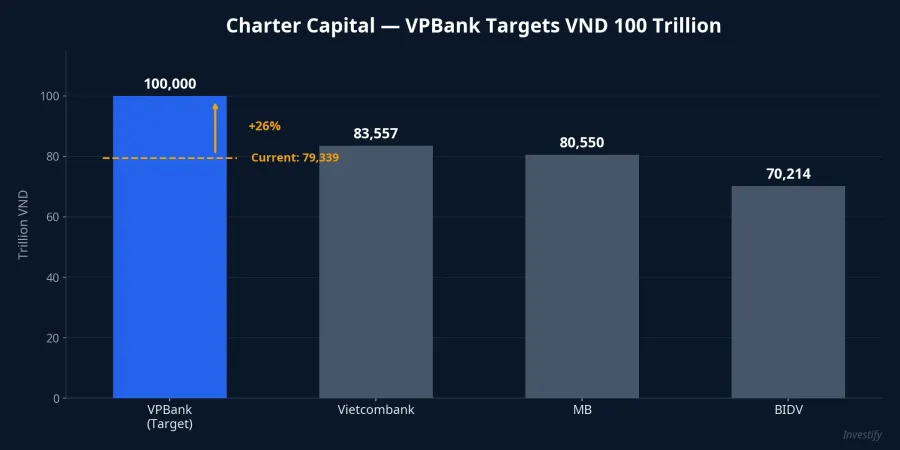
Looking at the numbers VPBank just disclosed in its 2026 AGM documents, it is hard not to be surprised: a 26.04% bonus share issuance to lift charter capital from VND 79,339 billion to approximately VND 100,000 billion. If approved, VPBank will become the first Vietnamese bank to reach this milestoneVnExpress, surpassing both Vietcombank (VND 83,557 billion) and MB (VND 80,550 billion).
This is more than a number on paper. Higher charter capital means wider credit room, better risk absorption capacity, and enhanced international competitiveness. But the question worth asking is: does bigger capital truly make VPBank the king?
A Record-Breaking 2025 — Springboard for New Ambitions
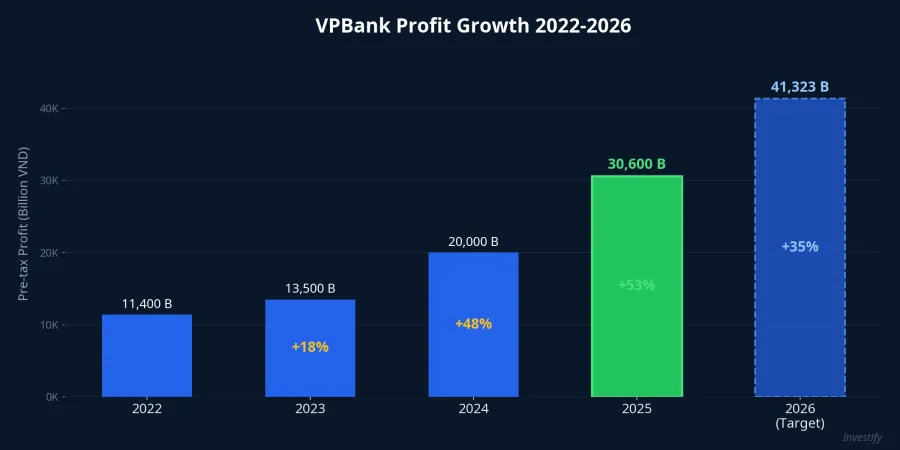
The capital increase plan did not come out of nowhere. According to VPBank's official reportVPBank, consolidated pre-tax profit in 2025 reached over VND 30,600 billion, growing 53% year-on-year and achieving 121% of plan. Consolidated total assets hit VND 1.26 quadrillion, up 36.4% — leading the private banking sector.
Noteworthy developments across VPBank's ecosystem: FE CREDIT posted profits for the second consecutive year at over VND 600 billion; OPES Insurance exceeded targets with VND 638 billion in profit; and notably, GPBank — the mandatorily transferred bank acquired by VPBank — turned a profit of over VND 500 billionCafeF after years of losing thousands of billions annually.
Riding this momentum, VPBank targets 2026 pre-tax profit of VND 41,323 billionCafeF, a 35% increase, alongside a 34% credit growth target.
What Do Shareholders Gain — and Lose?
Alongside the bonus shares, VPBank proposed a 5% cash dividendVietnamFinance, equivalent to approximately VND 3,966 billion, expected to be paid in Q2-Q3 2026. This signals VPBank is gradually balancing reinvestment with shareholder returns — a strategic shift from the 2010-2022 period when the bank channeled all resources into growth.
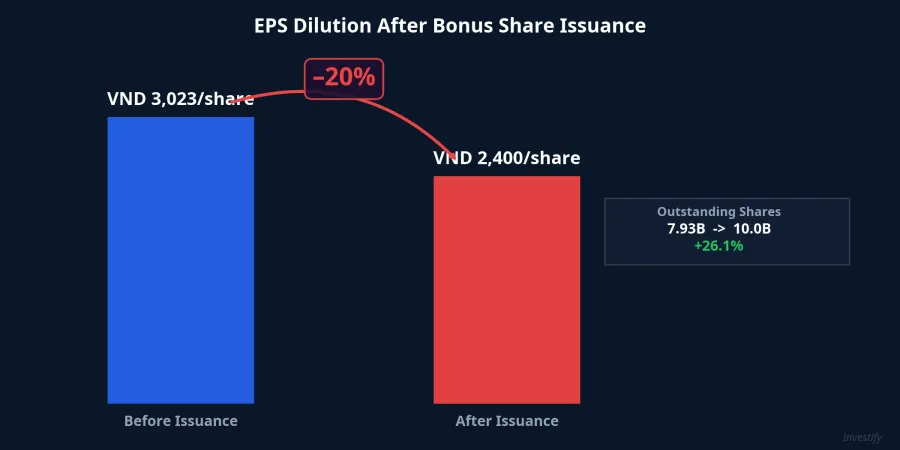
However, the flip side cannot be ignored: issuing 26.04% bonus shares will dilute EPS by approximately 20%. Outstanding shares increase from 7.93 billion to nearly 10 billion units. Despite a 53% profit increase, the supply expansion still pressures short-term P/E valuations. With 2025 after-tax profit at VND 23,990 billion, estimated EPS drops from roughly VND 3,023/share to VND 2,400/share.
Big Capital, But Has Quality Caught Up?
Placing VPBank next to the Big 4, the numbers tell an interesting story:
| Metric | VPBank | Vietcombank | MB | BIDV |
|---|---|---|---|---|
| Charter Capital (VND B) | 79,339 -> 100,000 | 83,557 | 80,550 | 70,214 |
| 2025 PBT (VND B) | 30,600 | 35,178 | 26,779 | 29,957 |
| ROE | ~11.1% | Higher | ~20.2% | Average |
| NIM | ~5-6% | ~3.2% | ~4.1% | ~3.0% |
VPBank leads on net interest margin (NIM) at roughly 5-6%, significantly higher than state-owned peers. But its ROE sits at just 11.1% — far below MB's 20.2%. In other words, VPBank is "big" but not yet as "fit" as some rivals when it comes to capital efficiency.
Notably, BIDV is also planning to raise its capital to VND 91,870 billionCafeF during 2025-2026, while Vietcombank is forecast to soon cross the VND 100 trillion mark as well. The capital race is far from over.
GPBank — A Test of Management Capability
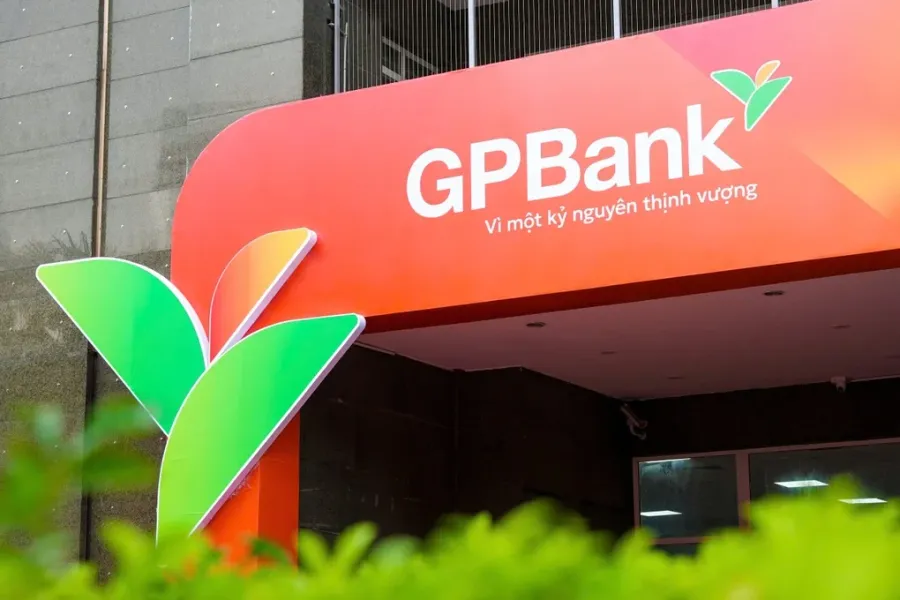
One factor that sets the VPBank story apart is its acquisition of GPBank under the mandatory transfer framework. In October 2025, GPBank officially rebranded as Era of Prosperity BankGovernment Portal, completing its brand restructuring. From a bank losing thousands of billions annually, GPBank has been continuously profitable since Q2 2025, achieving its full-year target of over VND 500 billion in profit.
Success with GPBank not only proves VPBank's management capabilities but also opens additional growth channels: a branch network, SME customer base, and digital banking platform — all being integrated into the broader ecosystem.
Looking Ahead
VPBank is playing a long game: raising capital to expand credit room, restructuring GPBank to add resources, paying cash dividends to retain shareholders. The VND 41,323 billion profit target for 2026 is ambitious, requiring 35% growth in an environment where industry-wide NIM is compressing.
Looking at the numbers, the key question for investors is not "does VPBank have the largest capital?" but rather "can VPBank convert capital scale into sustainable profitability?" VPB shares have risen over 41% in the past 12 months but corrected about 8% in the most recent month — the market is waiting for the answer from actual business results.