
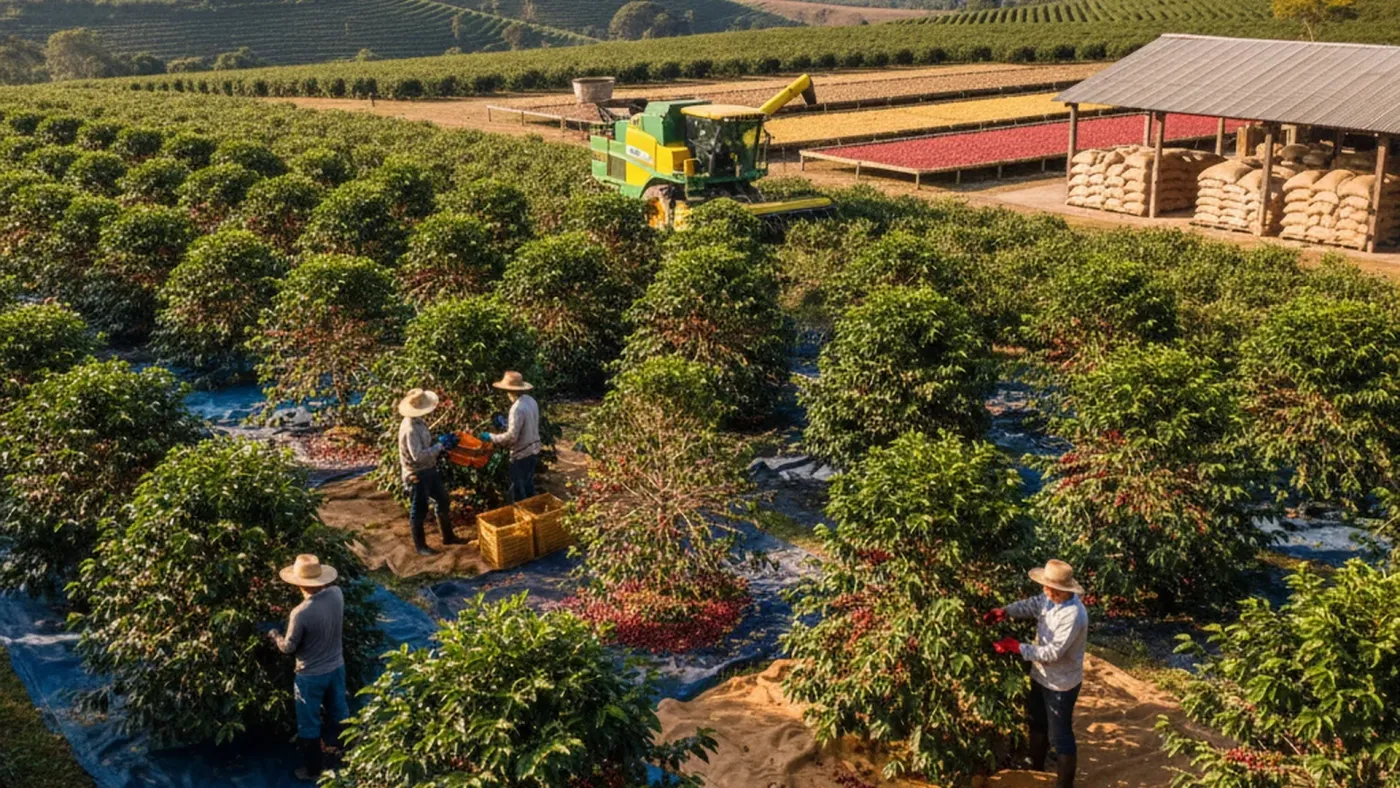

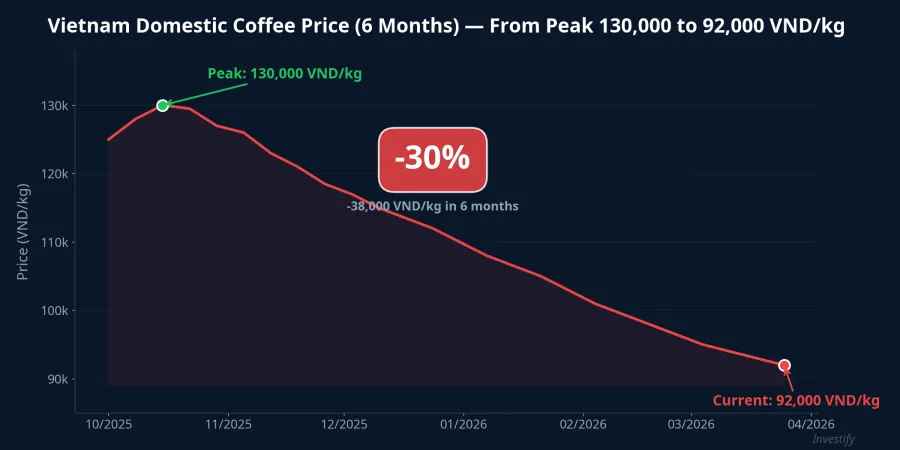
The big picture reveals a clear shift: the nearly three-year coffee price rally is showing signs of ending. Just months ago, Central Highlands farmers were celebrating prices above 130,000 VND/kg — an all-time high. But by March 27, 2026, prices had retreated to the 91,600 – 92,700 VND/kg range, marking 9 consecutive sessions of decline.Tin tuc Nong nghiep
On the London exchange, Robusta futures for May 2026 dropped to just 3,596 USD/ton, falling nearly 5% in the second half of March. Capital flows are shifting — and the question is no longer "will prices fall" but "how far."

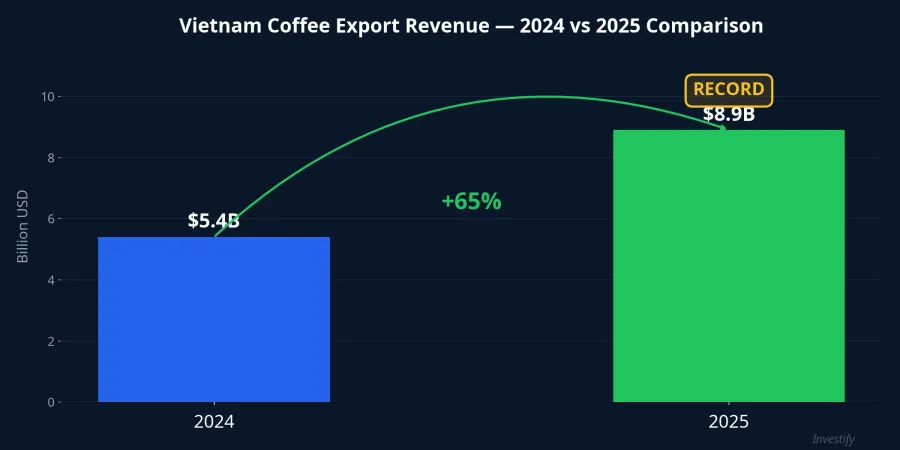
Looking Back at the 2025 Peak — A Record $8.9 Billion
In 2025, Vietnam exported 1.59 million tons of coffee, generating over $8.9 billion — an all-time record, up 58.8% in value and 18.3% in volume compared to 2024.VnEconomy The average export price reached 5,661 USD/ton, a nearly 40% year-over-year increase.
The last time the coffee industry saw growth like this was in the 1990s — when Vietnam first entered the global Robusta map. But the context this time is entirely different.
Brazil — The Supply "Bomb" About to Detonate
The forces that drove prices to record highs over the past two years were primarily tight global supply, historically low inventories, and El Nino effects. But the supply-demand picture is changing rapidly.
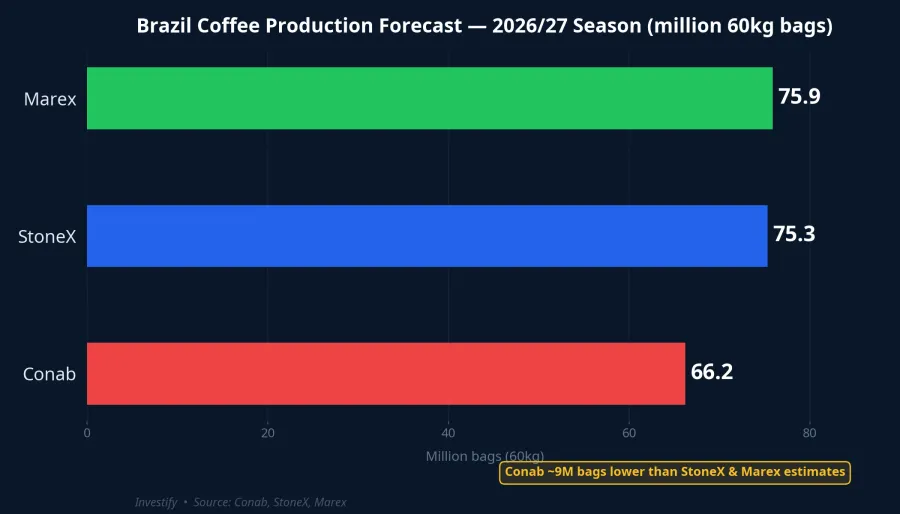
Brazil — the world's largest coffee producer — is entering the 2026/27 crop year with record-breaking forecasts:
- Conab projects output at 66.2 million bags — the highest ever, up 17% from the previous season.VietnamBiz
- StoneX raised its estimate to 75.3 million bags, while Marex forecasts 75.9 million bags.
- Arabica output alone is expected to surge 29.3%, driven by the biennial "on-year" cycle and ideal rainfall in Minas Gerais.
In other words, Brazil is about to flood the market with enough supply to replenish global inventories and relieve the shortage that pushed prices to their peak.
Early 2026 Exports — The "Sell More, Earn Less" Paradox
Data from the first two months of 2026 clearly reflects the reversal trend:
- Volume reached approximately 394,300 tons, up 22.9% year-over-year.Bao Van hoa
- Revenue hit $1.89 billion, up only 6.3% — far below the volume growth rate.
- Average export price fell to just 4,791 USD/ton, down 13.5% from the same period in 2025.Tin tuc Nong nghiep
The paradox of "selling more but earning less per ton" is the clearest signal that the era of high prices is drawing to a close. Export companies have already shifted into a defensive posture.Bao Quoc te
Impact on Farmers and the Stock Market
With over 700,000 coffee-growing households concentrated in the Central Highlands, the price decline puts significant pressure on income. From the peak above 130,000 VND/kg, current prices have lost about 30%. Many farmers are rushing to sell before prices drop further — creating a vicious cycle of rising supply that pushes prices even lower.
However, the 91,000-93,000 VND/kg range remains significantly higher than pre-2023 levels (around 40,000-50,000 VND/kg). Farmers are not yet losing money — the issue lies in expectations.
On the stock exchange, VCF (Vinacafe Bien Hoa) — Vietnam's largest instant coffee company — has profit margins relatively insulated from raw material price swings thanks to its value-added products. However, VCF currently has extremely low liquidity as majority shareholder Masan holds 98.79% of shares, no longer meeting public company standards.VnEconomy
Outlook — Expectations Need Resetting
The big picture suggests the 2023-2025 coffee price super-cycle may have peaked. Three factors are weighing heavily:
- Record Brazil supply — the single biggest factor, potentially pulling Robusta down to the 3,000-3,500 USD/ton range in Q2 2026.
- Strengthening USD amid Middle East tensions, pressuring commodity prices.
- Global inventories being replenished after two years of shortages.
Weather risks in Brazil and Middle East conflict variables could still trigger unexpected recoveries. But investors and farmers should prepare for prices remaining significantly below the 2025 peak — though still above pre-cycle levels.
The golden era of coffee prices may be over. But Vietnam's coffee industry, as the world's number one Robusta exporter, still has plenty of room to grow — if it pivots toward deeper processing and higher value-added products.