


The big picture reveals the global energy market is entering its most tense period in years. And for the first time in history, Vietnam's government has had to tap the national budget to inject funds directly into the Fuel Price Stabilization Fund — a signal investors cannot afford to ignore.
An Unprecedented Decision: VND 8,000 Billion From the Budget
On March 28, 2026, the Prime Minister signed Decision 483/QD-TTg, allocating VND 8,000 billion as an advance to the Fuel Price Stabilization Fund, drawn from 2025 central budget surplus revenue.Thanh Nien
Capital flows are shifting in unprecedented ways. Previously, the Stabilization Fund self-balanced through contributions from fuel trading enterprises. The government's direct budget intervention signals that conventional policy tools are no longer sufficient. The advance must be repaid within 12 months, and the Ministry of Industry and Trade has been granted full authority to determine spending levels based on global oil price movements.Luat Viet Nam
The Hormuz Trigger — Brent Crude Surges Past $114
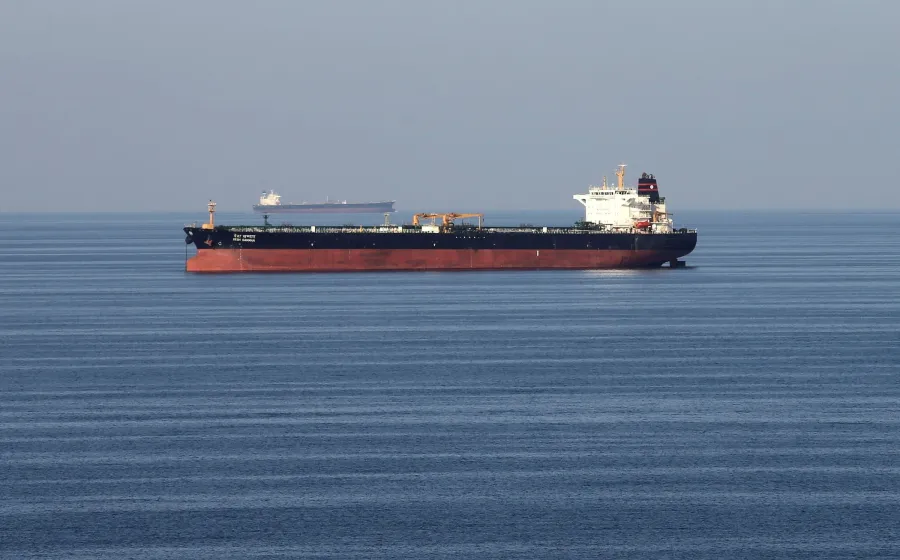
The last time oil markets saw similar volatility was in 2022 when the Russia-Ukraine conflict erupted. But this time, the trigger comes from the Strait of Hormuz — a chokepoint handling roughly 20% of global seaborne oil trade.Dan Tri
Brent crude closed on March 27 at $114.8 per barrel, surging 6.24% in a single session.Thanh Nien Over the past 90 days, Brent has exploded roughly 53% — a rally that has shaken global markets.
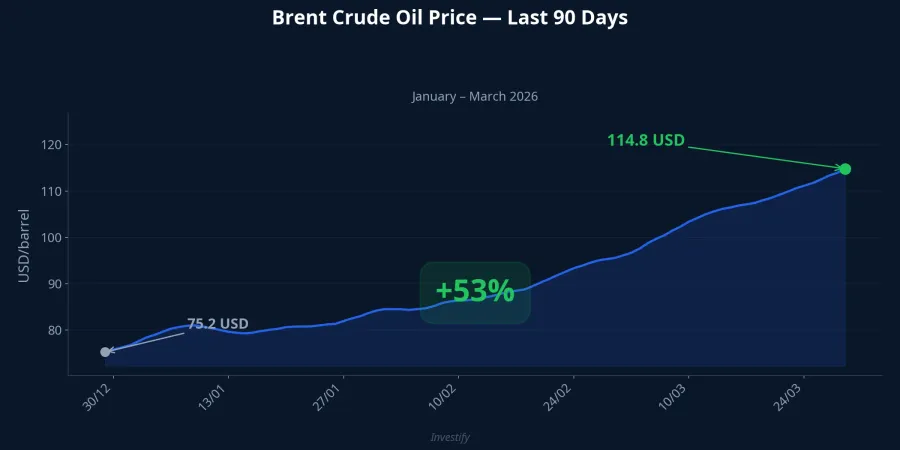
Goldman Sachs has called this "the largest supply shock in crude oil market history," raising its 2026 average Brent forecast to $85 per barrel. In a scenario where Hormuz disruptions persist for two months, Brent could reach $93 per barrel by Q4. Worst case: $135 per barrel.Kitco
Inflation and Trade Balance — A Double Squeeze
CPI Already Running Hot
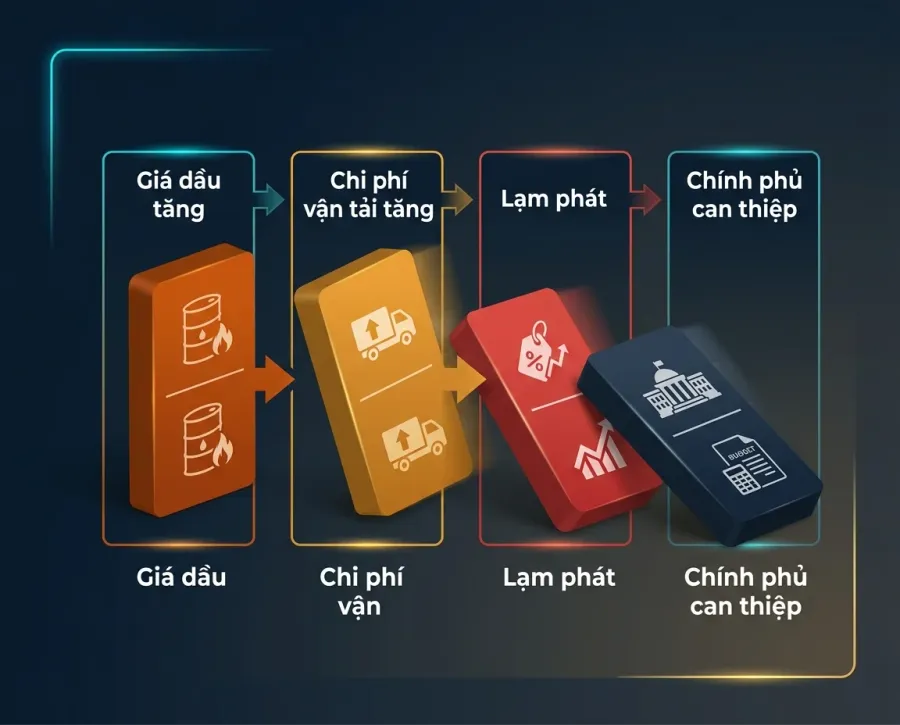
Average CPI for the first two months of 2026 rose 2.94% year-over-year, with core inflation climbing 3.47%.Thị trường TCTT Further fuel price increases will feed directly into transportation and logistics costs, then spread to consumer prices. The VND 8,000 billion fund serves as a short-term shock absorber, but if Brent stays above $110 per barrel, CPI pressure in Q2 will be immense.
Trade Balance Reversal
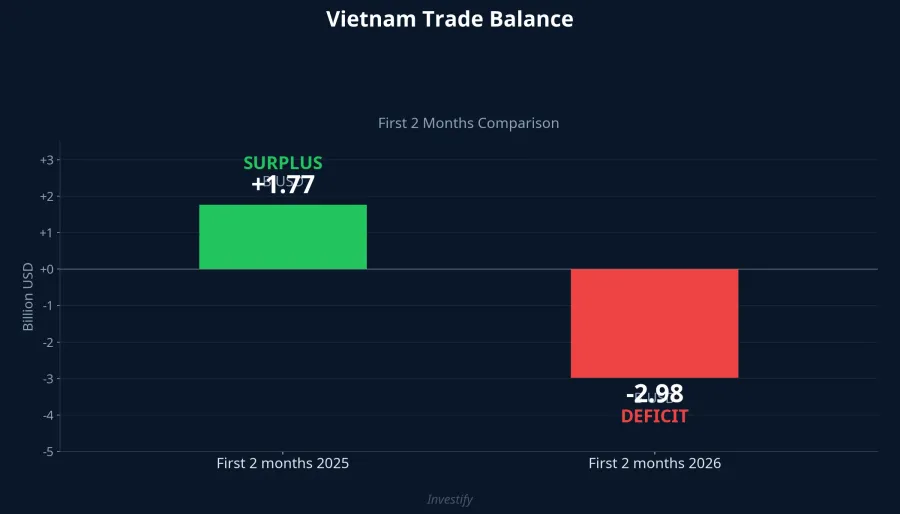
Vietnam posted a trade deficit of $2.98 billion in the first two months of 2026, a complete reversal from the $1.77 billion surplus in the same period of 2025.VnEconomy By mid-March, the cumulative deficit reached an estimated $3.5 billion. Soaring oil prices are inflating fuel import values, while Hormuz-driven shipping cost spikes create a double squeeze on the trade balance and the USD/VND exchange rate.
Winners and Losers on the Stock Market
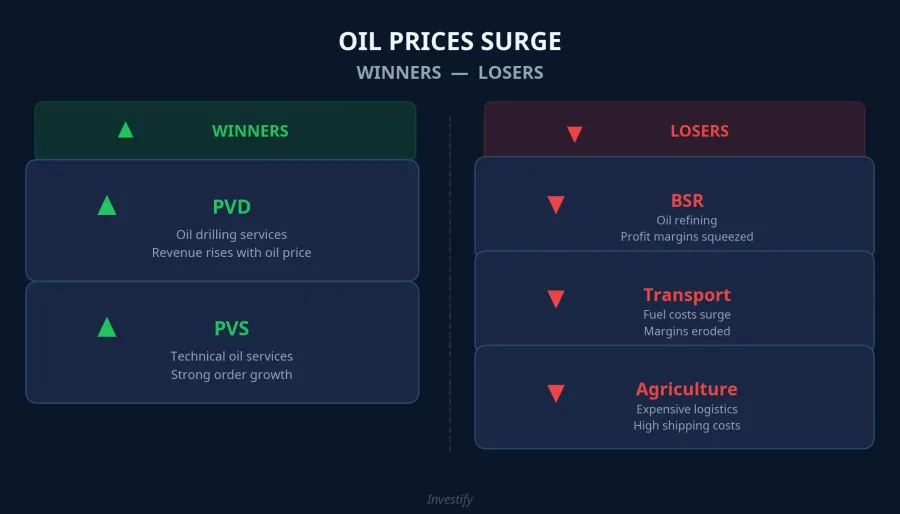
Capital flows are clearly shifting between sectors as oil prices climb.
Winners: Oil Services (PVD, PVS)
PV Drilling (PVD) and PV Technical Services (PVS) stand to benefit directly. High oil prices boost exploration and production activity, increasing demand for drilling and technical services. PVS hit an all-time high of VND 56,400 in early March before correcting. However, both stocks declined last week (PVD down roughly 16%, PVS down roughly 5%), suggesting the market is repricing short-term risk despite a positive medium-term outlook.
It's Complicated: Oil Refining (BSR)
Binh Son Refining (BSR) is not a simple "oil prices up = stock wins" story. BSR buys crude at elevated prices while output product prices are capped by stabilization policies. The crack spread may narrow when crude rises faster than retail prices. BSR traded in the VND 26,000–30,500 range last week, reflecting market ambivalence.
Losers: Transport and Agriculture
Shipping companies face surging fuel costs that erode margins unless freight rates adjust in time. Agricultural exporters bear the brunt of rising logistics costs, especially as international shipping rates climb due to Hormuz rerouting.
What Should Investors Watch Next Week?
The VND 8,000 billion decision sends two messages. First, the government is committed to price stability and short-term inflation relief. Second, the very need to tap the budget reveals the severity of the situation.
With the VN-Index around 1,672 points, investors should:
- Monitor Brent prices and Hormuz developments closely — this is the decisive variable for next week's trading
- Be selective in oil and gas stocks: favor PVD, PVS with long-term contracts; exercise caution with BSR due to crack spread risk
- Stay alert on transport and agriculture: rising input costs could eat into Q2 profits
- Don't ignore macro risks: if inflation spirals beyond control, the State Bank may need to tighten monetary policy, impacting the entire market
The big picture shows VND 8,000 billion is a necessary painkiller — but is it enough to weather an oil price storm that shows no signs of cooling? Next week will be the critical test.