
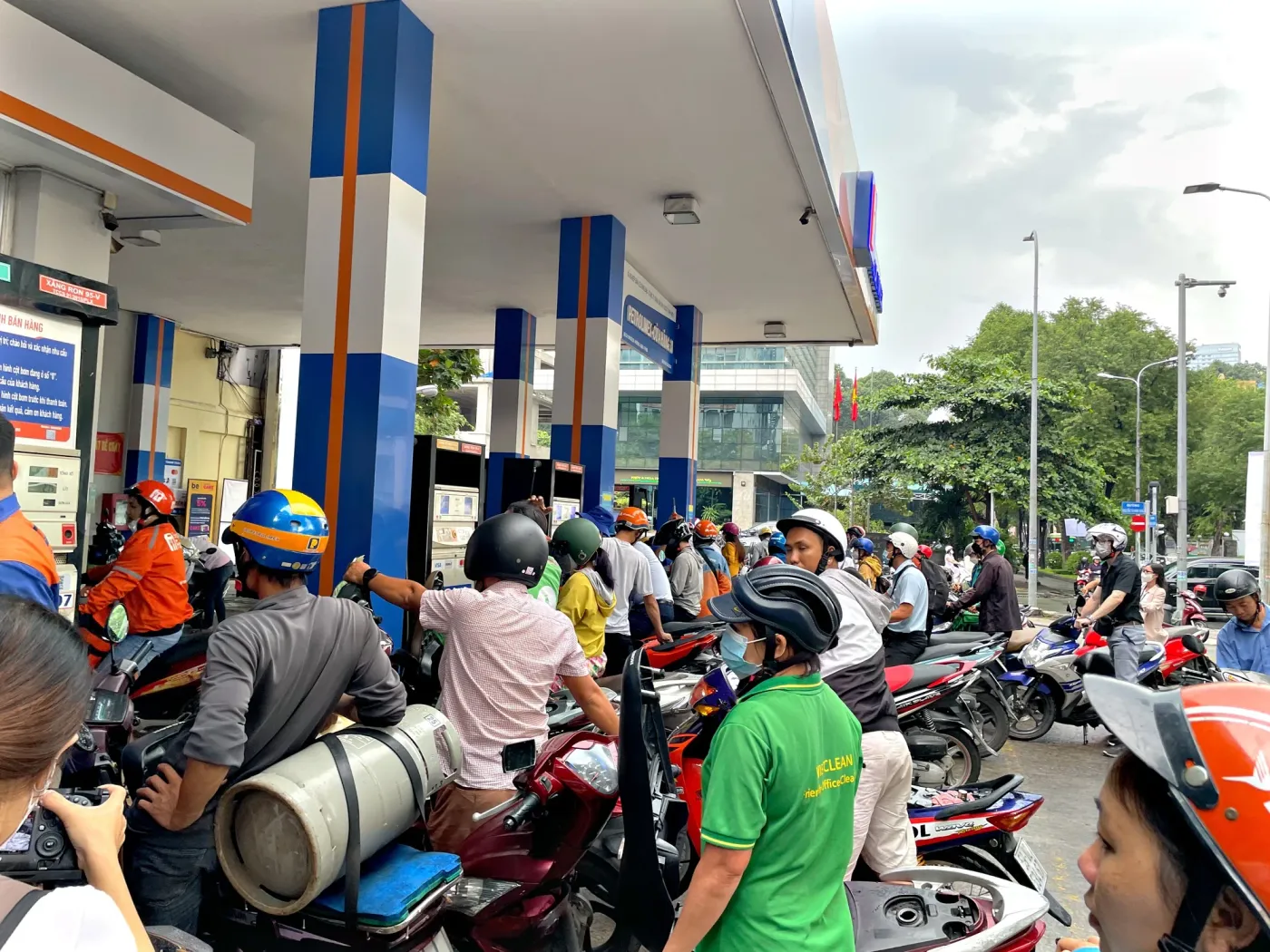

The big picture reveals a worrying reality: this energy crisis is no longer just a headline on Reuters or Bloomberg — it has seeped into every gas station, every classroom, every household budget across Southeast Asia.
Since the US-Israel conflict with Iran erupted in late February 2026, the Strait of Hormuz — the shipping lane carrying roughly 20% of global crude oil and LNG — has been virtually blockaded. The direct consequence: Brent crude surged past $106/barrel on March 26, up nearly 6% in a single session after Iran refused direct negotiations with the US.NPR
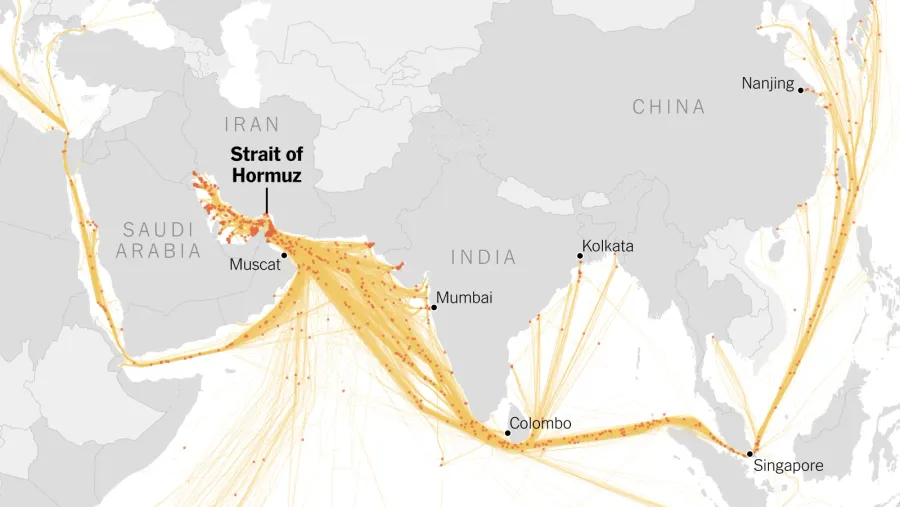
President Trump extended his ultimatum demanding Iran reopen Hormuz to April 6, 2026, but global capital flows show no signs of de-escalation.
Brent Crude — A Shock With No End in Sight
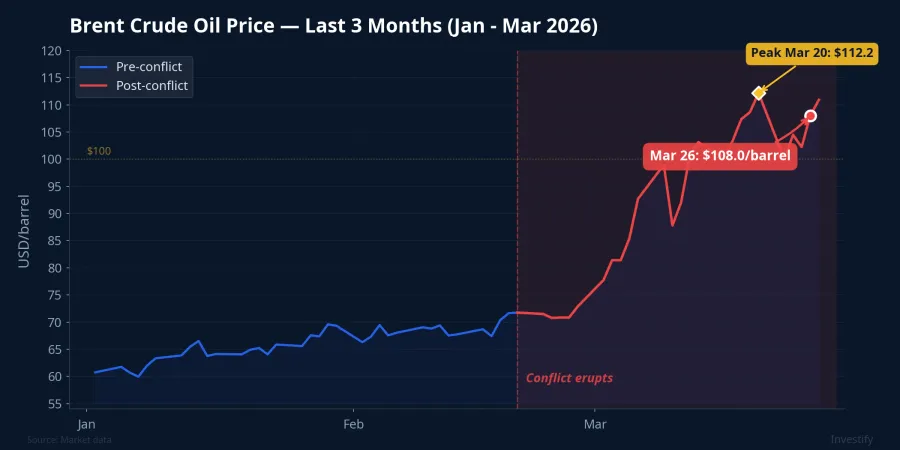
Looking at the chart, Brent traded in a stable $60-70/barrel range before the conflict. But within just one month of the Hormuz chokepoint tightening, prices nearly doubled. The $112.2 peak recorded on March 20 shows the market is fully wired to supply risk — every piece of bad news is priced in almost instantly.
Capital flows are shifting — from the assumption of "cheap oil forever" to a defensive posture, pushing energy costs to levels many Asian economies cannot sustain for long.
Southeast Asia: Schools Closing, Government Offices Cutting Hours
Laos has been hit hardest in the region. On March 19, the government cut the school week to just 3 days, applying to all public and private institutions.Laotian Times As of March 11, 1,068 out of 2,538 gas stations had shut down — over 40% — after Thailand cut fuel exports to Laos by 25%.
The Philippines declared a nationwide energy emergency on March 24. The country imports up to 95% of its crude oil from the Middle East, with fuel reserves lasting only about 45 days. Government agencies shifted to a 4-day work week starting March 9.Bloomberg
Pakistan closed all schools from March 10, initially for 2 weeks but now considering an extension. Gasoline prices jumped 20% in one week, with oil reserves lasting just 28 days.Al Jazeera
Additionally, Thailand ordered civil servants to work from home, Bangladesh closed universities early, Myanmar implemented alternating driving days, and Cambodia dropped fuel import taxes to 0%. The common thread: an entire region racing to conserve every last liter of fuel.
IEA Releases 400 Million Barrels — Largest in History, But Is It Enough?
The last time the IEA coordinated a major strategic reserve release was in 2022, following the Russia-Ukraine war, at 182 million barrels. This time, the figure is more than double: 400 million barrels from 32 countries.Al Jazeera Japan contributed 80 million barrels (equivalent to 15 days of domestic demand), South Korea 22.46 million barrels, and the UK 13.5 million barrels.
Yet oil prices kept climbing. With Hormuz throughput down to less than 10% of pre-conflict levels, the strategic release is merely a short-term shock absorber — like taking painkillers without treating the disease.
Vietnam — Relatively Well-Positioned Thanks to Domestic Refining
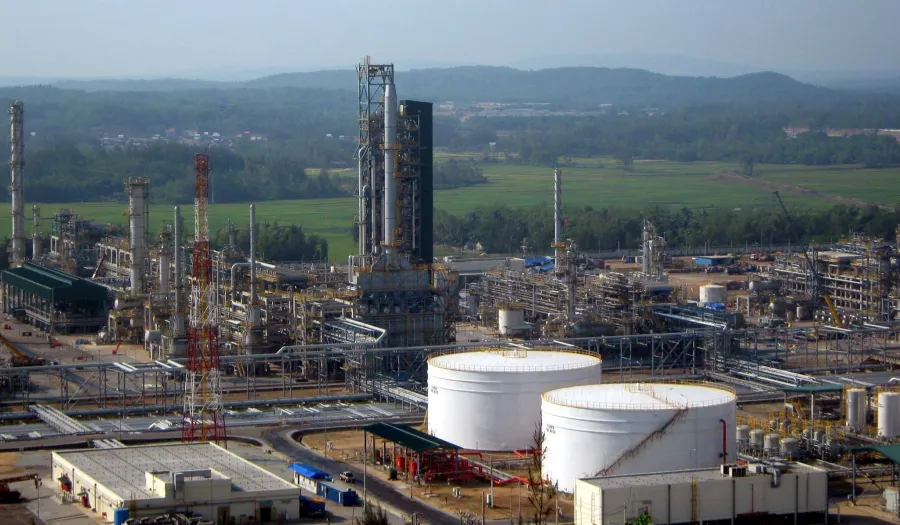
While many countries scramble, Vietnam has deployed a comprehensive response toolkit:
- The fuel price stabilization fund continues operating, slowing the pass-through of rising wholesale prices to consumers.
- Import tax cuts: Decree 72/2026/ND-CP (issued March 9) reduced MFN fuel tariffs to 0%.
- Strategic reserves expansion: purchased an additional 4 million barrels and initiated construction of a strategic reserve facility at Nghi Son.
- Two domestic refineries — Nghi Son and Dung Quat — meet approximately 70% of domestic demand. Nghi Son has secured feedstock through the end of May 2026.Thanh Hoa TV
- Aid to Laos: Vietnam is supplying 50 million liters of fuel and allowing third-party fuel transit through its territory.Laotian Times
Thanks to relatively high self-sufficiency in fuel supply, gasoline prices in Vietnam remain lower than in many regional peers. This is a clear competitive advantage — but it does not mean total immunity.
Inflation Pressure — The Numbers Don't Lie
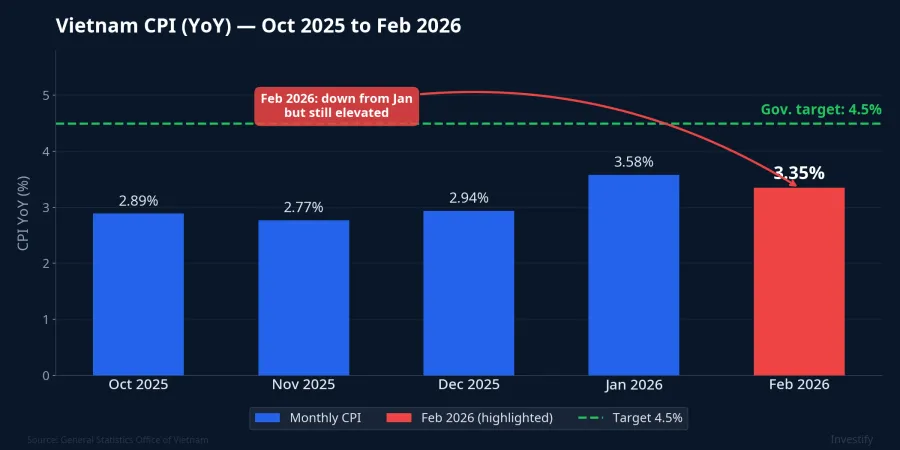
February 2026 CPI rose to 3.35% (from 2.53% in January), with the housing, electricity, water, and fuel category surging 5.60%. Core CPI reached 3.74% — indicating that price pressures are spreading beyond energy into transportation costs, manufacturing, and consumer goods.
With Brent sustained above $100/barrel, the government's 2026 CPI target of under 4.5% is under serious threat. Three oil price scenarios to watch:
- Successful negotiations, Brent returns to $72-80 — low probability in the near term.
- Tensions contained, Brent at $80-100 — base case scenario.
- Escalation, Brent above $100 for an extended period — high-risk scenario.
What Should Investors Watch?
Capital flows are shifting visibly. The current energy environment creates headwinds for energy-intensive sectors — transportation, aviation, power-hungry manufacturing — while opening opportunities in renewables and companies with self-sufficient supply chains.
Key milestones to track: Trump's April 6 deadline with Iran, the pace of global strategic reserve drawdowns, Vietnam's domestic refining output, and March CPI data. The most important thing during this period is to stay clear-headed, follow the data, and not let emotions drive investment decisions.