
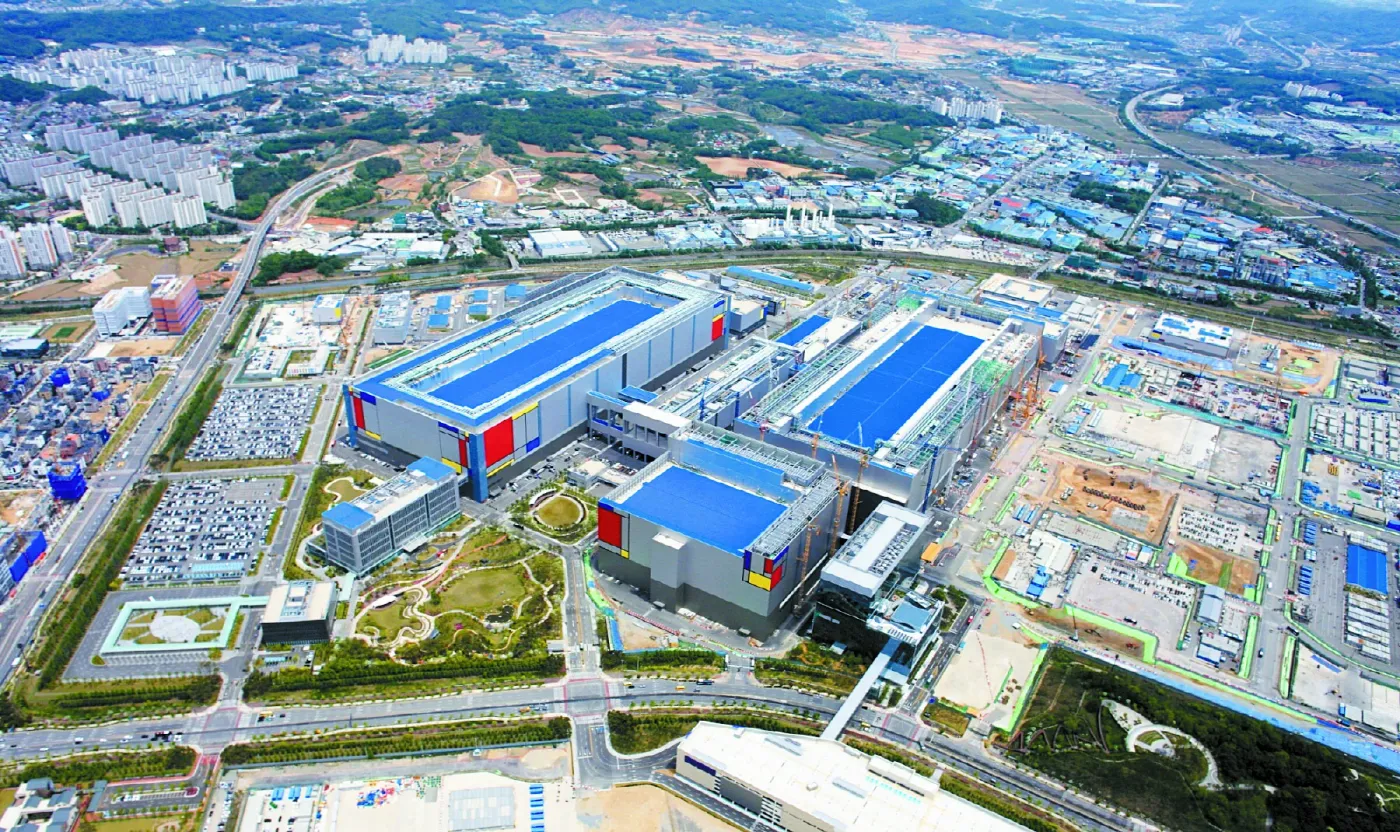

The big picture reveals an uncomfortable truth: a trillion-dollar semiconductor industry can be shaken by a gas most people only associate with party balloons. Iran's attack on Qatar is not merely a geopolitical event — it is redrawing the risk map of the entire global chip supply chain.
One Attack, One-Third of Supply Gone
On the evening of March 2, 2026, Iranian drones struck Ras Laffan Industrial City on Qatar's northeastern coast — the world's second-largest helium production hub. QatarEnergy declared force majeure just two days later. Follow-up strikes on March 18-19 inflicted further damage on the Pearl GTL plant and nearby LNG infrastructure.Fortune
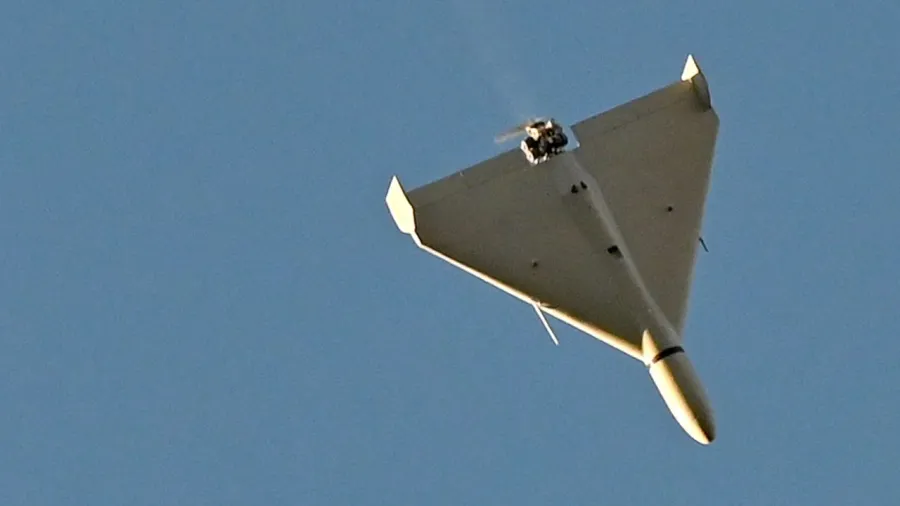
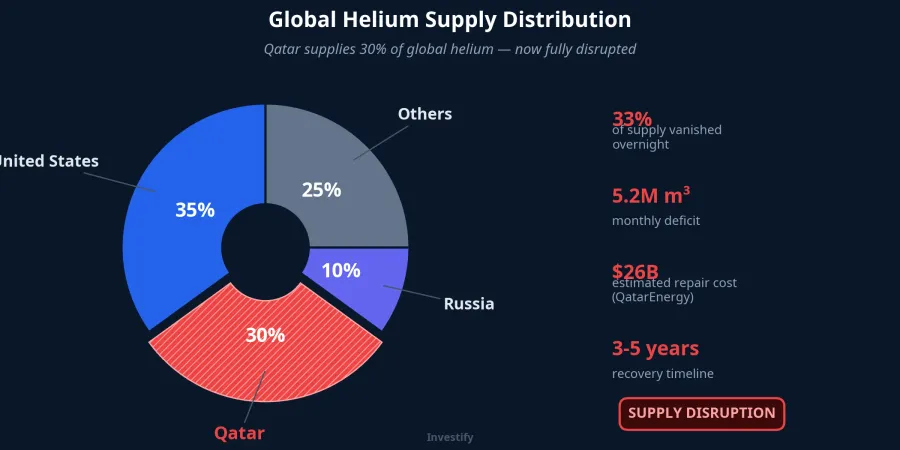
The aftermath: approximately 33% of global helium supply vanished overnight. The market now faces a monthly deficit of 5.2 million cubic meters of helium. QatarEnergy estimates repair costs at up to $26 billion, with a recovery timeline of 3-5 years. Spot helium prices in Northeast Asia surged to $152.7/MC in March 2026, a 21.5% jump in a single month.CNBC
Helium — The Irreplaceable "Lifeblood" of Chipmaking
For most people, helium is just the gas that fills balloons. But in semiconductor manufacturing, helium is truly irreplaceable.
During the etching process, helium is pumped between the wafer and its support to rapidly dissipate heat, preventing wafer warping. Helium also detects leaks in vacuum chambers and stabilizes the etching process with extreme precision. According to a semiconductor equipment professor at South Korea's Sangmyung University, no material can substitute for helium — its unique combination of thermal conductivity, chemical inertness, and atomic size is unmatched in the periodic table.
The capital flow logic is simple: no helium means no next-generation AI chips below 5 nanometers.
Samsung and SK Hynix: Two Giants Walking a Tightrope
South Korea — home to Samsung and SK Hynix, which together produce roughly two-thirds of the world's memory chips — faces the heaviest impact. In 2025, South Korea imported 64.7% of its helium from Qatar.Tom's Hardware
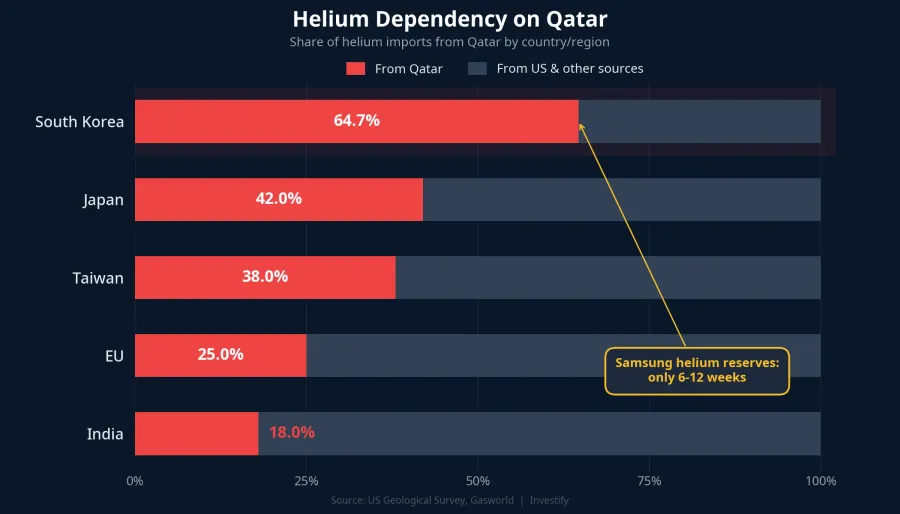
According to TrendForce, Samsung is the most exposed chipmaker with estimated reserves of just 6-12 weeks. Within 1-2 weeks, helium must be rationed by priority, and wafer output begins declining. Every wafer not produced today means a memory chip that will not exist by Q3 2026.TrendForce
Both Samsung and SK Hynix are racing to secure alternative supplies from the US (which holds 35% of global supply) and exploring deals with Russia. Samsung has also deployed an internal helium recycling system (HeRS) since April 2025, saving roughly 4.7 tons per year. However, the last time the market faced a comparable situation — Helium Shortage 3.0 in 2019 — the deficit was much smaller and still took over 2 years to stabilize.
Vietnam's Semiconductor Dream: Risk or Strategic Opportunity?
Vietnam is betting big on semiconductors. In September 2024, the Prime Minister signed Decision 1018 targeting at least 100 chip design companies, 1 small-scale fab, and 10 packaging and testing plants by 2030. In March 2025, the country's first wafer fabrication plant was approved with an investment of VND 12,800 billion (approximately $500 million).
The FDI ecosystem is impressive: Intel operates its largest global assembly and testing facility in Ho Chi Minh City. Amkor is investing $1.6 billion in the world's largest OSAT plant in Bac Ninh. Samsung is building FC-BGA lines in Thai Nguyen. FPT has announced an advanced chip testing facility in Bac Ninh, with Phase 1 deployment in 2026-2027.The Investor
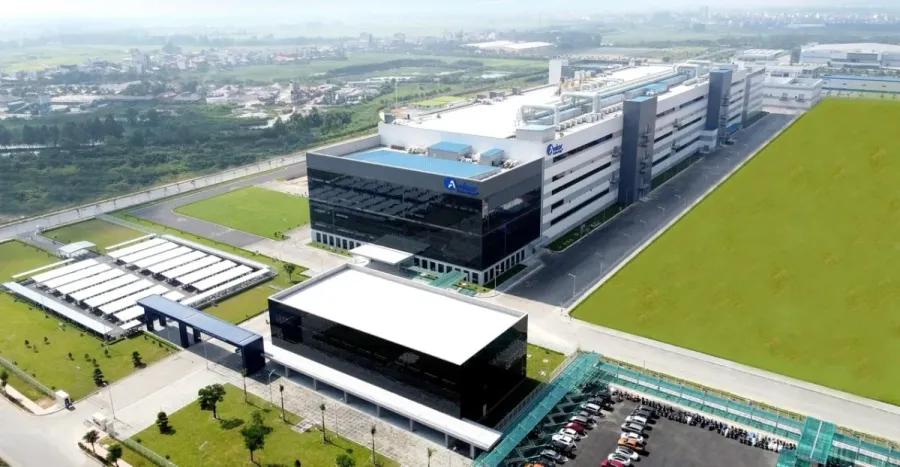
The good news: Vietnam's facilities primarily focus on back-end operations (assembly, packaging, testing), which are far less helium-dependent than front-end fabrication. Direct impact on Vietnam is limited.
But indirect effects cannot be ignored. When Samsung cuts wafer output in South Korea, orders flowing to back-end plants in Vietnam also decline. FDI project timelines may be delayed as multinationals redirect resources to crisis response.
Paradoxically, the crisis could create a strategic opportunity. As chip giants recognize the fragility of concentrated supply chains, the trend toward diversification will accelerate. Vietnam — with its workforce advantages, geographic position, and established FDI ecosystem — stands to attract more investment in supporting infrastructure: cold storage, technical gas logistics, and packaging and testing services.
What Should Investors Watch?
The Ras Laffan helium crisis exposes a critical vulnerability in the semiconductor industry: excessive concentration on a handful of strategic supply sources. For Vietnamese investors, this is the moment to look beyond oil prices when assessing the impact of Middle East conflicts.
The big picture points to three things worth monitoring closely: the Ras Laffan repair timeline (estimated 3-5 years), Samsung and SK Hynix's supply diversification moves, and whether semiconductor FDI continues flowing to Southeast Asia — where Vietnam is steadily establishing its strategic position.